
Meet Molly, our amazing Marketing Coordinator! She's super creative and dedicated, whether she's handling Snapper comms or walking her dog, Candy. Molly loves Snapping e-scooters to help create a more accessible city for everyone.
Every walk starts somewhere.
It might be a quick loop around your neighbourhood, a longer weekend wander, or a route you’ve walked hundreds of times before. But sometimes, the hardest part isn’t the walking, it’s knowing where to go.
That’s where Victoria Walks comes in.
Victoria Walks works to make walking safe, easy and part of everyday life, by improving the environments we walk in.
Whether you’re looking for a short stroll or a new area to explore, these maps make it easy to get started.
Once you’ve found a new route, something interesting happens.
You start to notice more.
The small details. The things that make a walk enjoyable. And sometimes… the things that don’t.
On your next walk, channel your inner street auditor. Here’s what to look for and why it’s a Snappable offence:
Look for uneven pavers, cracked concrete, or tree roots lifting the asphalt. These often occur near large street trees or in older areas where the ground has shifted over time.
If a lip is higher than a 50c coin, it’s a significant trip hazard. Even a small displacement can catch the edge of a shoe or the small front wheels of a wheelchair.
What’s a minor stumble for you could be a complete no-go zone for someone with a mobility aid or vision impairment. By Snapping these hazards, you're helping authorities identify specific spots that need maintenance to keep the community upright and active.
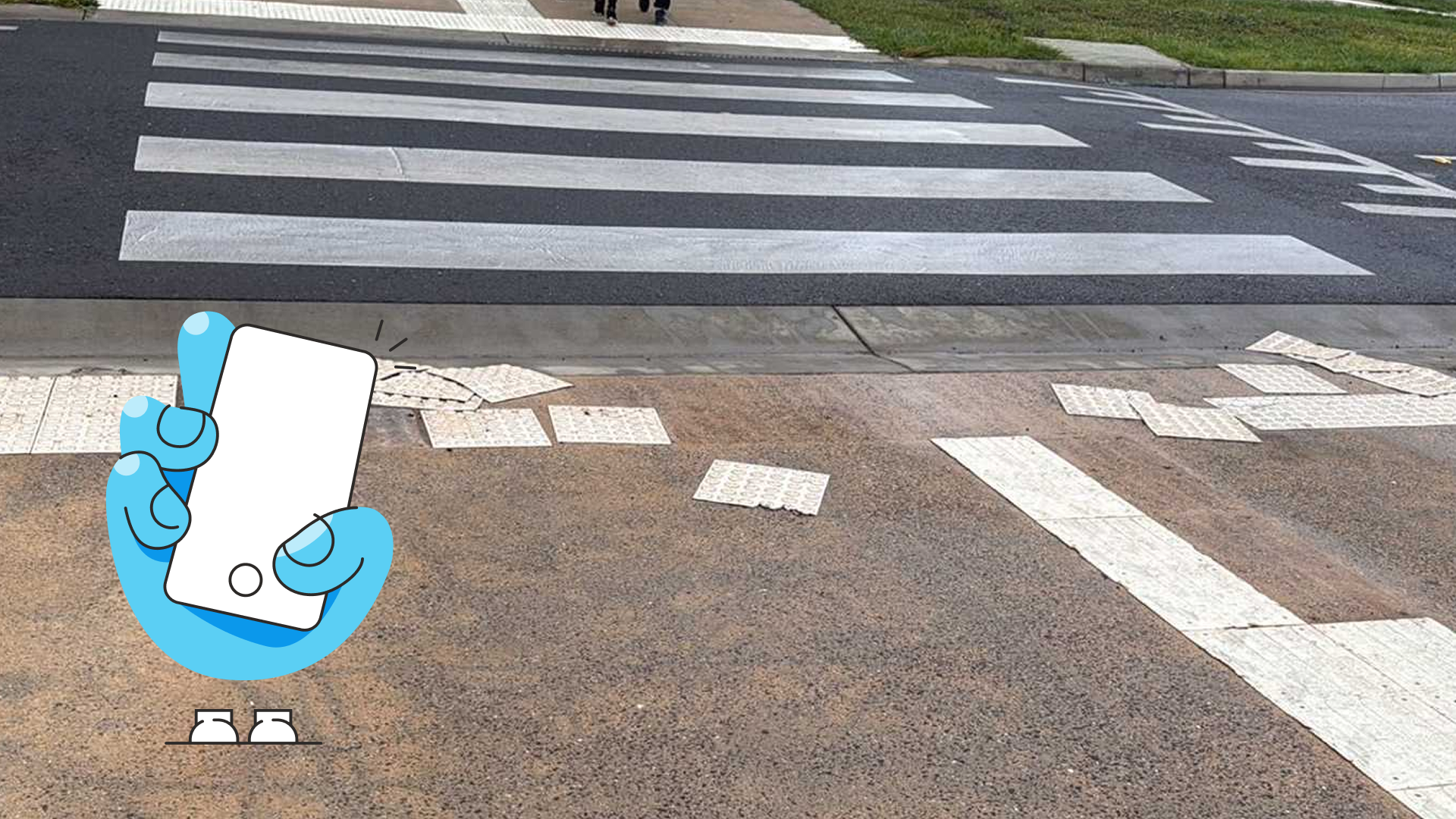
Look for those yellow or silver bumps on the ground at pedestrian crossings, top of stairs, or train station platforms. Check if they are missing, peeling up, or so worn down they’ve become smooth.
These indicators are essential underfoot maps. They provide a tactile cue that a hazard, like a road or a ledge, is ahead, allowing people who are blind or have low vision to stop and orient themselves safely.
When these are damaged, a vital safety feature is lost. Making sure they’re in top-notch condition means our streets remain inclusive for everyone, regardless of their level of vision.
Look for overhanging vegetation like low-hanging tree branches, or hedges that have crept across the width of the footpath.
If a path is narrowed to less than 1.2 metres, or if a branch is low enough to hit a tall person’s head, it’s an issue. In wet weather, these damp leaves can also become quite slippery, adding another layer of risk.
Overgrowth often forces people off the designated path and onto the nature strip or, worse, out onto the road into the path of cars.
Keep an eye out for street lights that are flickering, completely dark, or obscured by thick tree canopies. This is especially important near crossings and intersections.
While we often walk during the day, many of us commute or exercise at dawn and dusk. Good lighting is a huge factor in perceived safety, it’s what makes a neighbourhood feel inviting rather than intimidating after the sun goes down.
If a street light is out, it makes it much harder to see the trip hazards we mentioned earlier. Reporting a faulty light is a simple way to help brighten up the whole street for your neighbours.
Look for overflowing public bins, furniture dumped on the nature strip, and piles of scattered litter that have collected in the corners of the path.
Keeping our neighbourhoods walkable isn't just limited to the condition of the footpaths. If a street feels cluttered, messy, or neglected, it can significantly hinder the perception of our local area and make people feel less comfortable taking their daily stroll.
A clean street is a walkable street.
Explore walking maps: https://walkingmaps.com.au/
Download Snap Send Solve: https://onelink.to/vicwalks