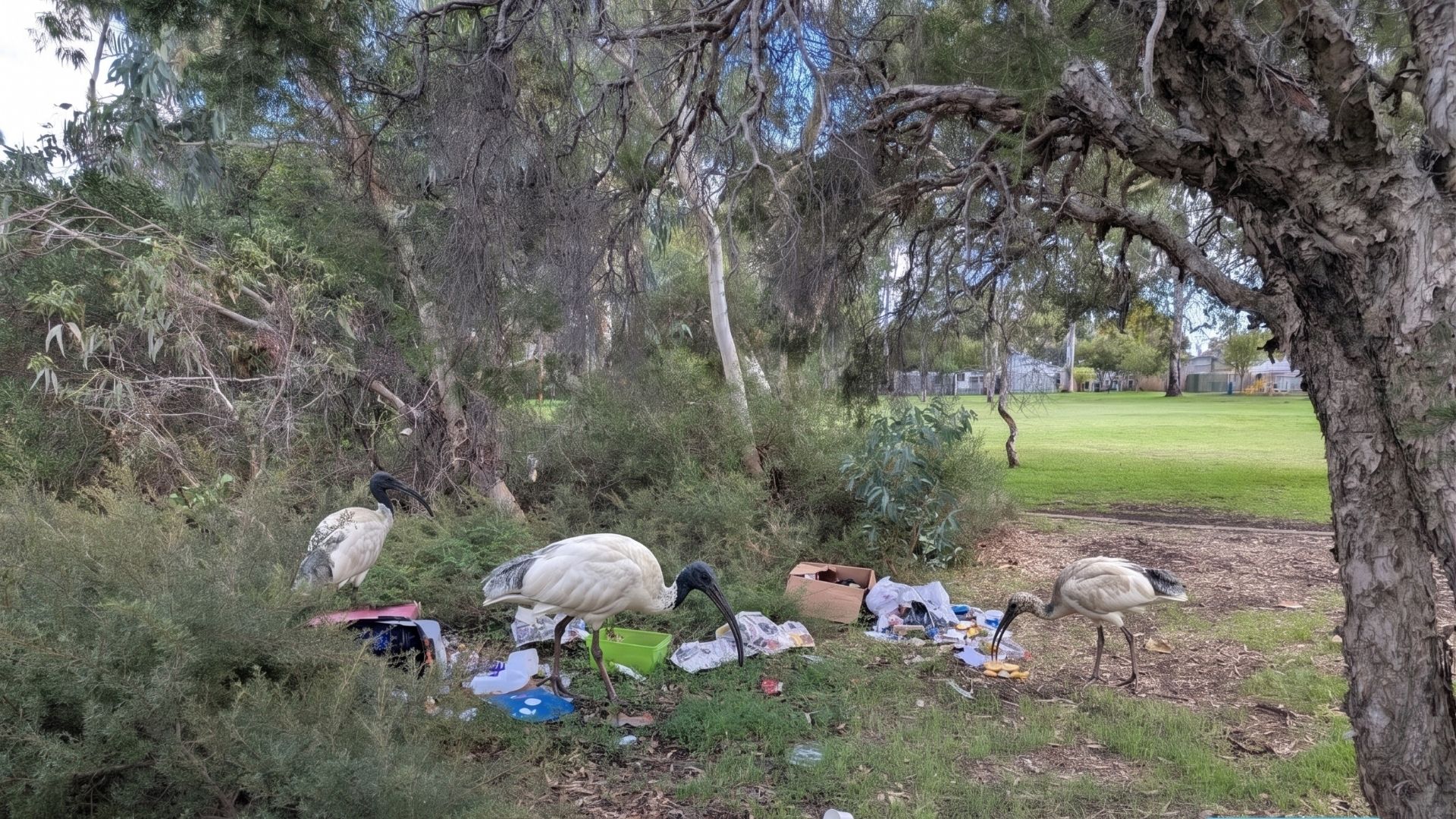
Bin chicken complaints have grown six-fold in NSW
The Australian white ibis has well and truly made itself at home in Sydney.
Reports about bin chickens in New South Wales have surged. There were 278 reports lodged through Snap Send Solve last year, six times more than five years ago. Nationally, residents made 658 bin chicken complaints in 2025, with NSW leading the country, followed by Queensland and Victoria.
Where bin chickens go, rubbish follows
The data reveals a strong link between bin chicken activity and broader rubbish issues. In NSW councils with high bin chicken reports (20 or more in 2025), 25.3% of all reports to Snap Send Solve relate to rubbish. In councils with few or no bin chicken complaints, that share drops to just 10%.
The pattern makes sense. Overflowing bins, dumped takeaway containers and uncollected food waste are an open invitation for ibis to move in.
NSW received 64,987 rubbish reports in 2025 overall, up 22.2% year on year. The bin chicken hotspots are doing much of the heavy lifting:
What residents are saying
The frustration is showing up in the comments residents leave with their reports. One inner city resident wrote: "The ibis birds are destroying the ambiance of eating in the plaza. They steal food and foul the tables."
It's a sentiment that echoes across inner Sydney, where outdoor dining precincts, transport hubs and parks have become reliable feeding grounds for the bird the rest of the country loves to hate.
A quote from our CEO
"Bin chickens are a brilliant indicator species for waste management," said Danny Gorog, founder and CEO of Snap Send Solve. "They turn up where food waste is accessible, where bins are overflowing, and where public space cleaning hasn't kept pace with foot traffic. The fact that complaints have grown six times in five years tells you the problem is getting worse, not better. The good news is that relevant authorities now have data they can act on, right down to the suburb and street level."
What this means for councils
The link between bin chicken sightings and rubbish reports gives the relevant organisations a useful early signal. Where ibis activity is rising, it's almost always a sign that waste infrastructure needs attention: more frequent collections, bigger or smarter bins, better venue compliance, or targeted cleaning routes.
Authorities that treat bin chicken reports as more than a quirky data point can use them to prioritise resourcing and get ahead of bigger amenity issues before they escalate.
Snap Send Solve works with councils and authorities across Australia and New Zealand, and delivered around 1.8 million reports in 2025. The platform gives residents a fast way to flag what they see, and gives councils the structured data they need to act.